Agency · Multi-image + rationale · 5 credits per concept
Eight defensible directions, with the rationale to win the room.
Brief in. Pitch Pack out: distinct conceptual heroes, the two-sentence audience read that defends each, three taglines per direction, a 0–100 audience-fit score, risk flags, and a production-feasibility tier — composed into a deck-ready Concept Defense PDF.
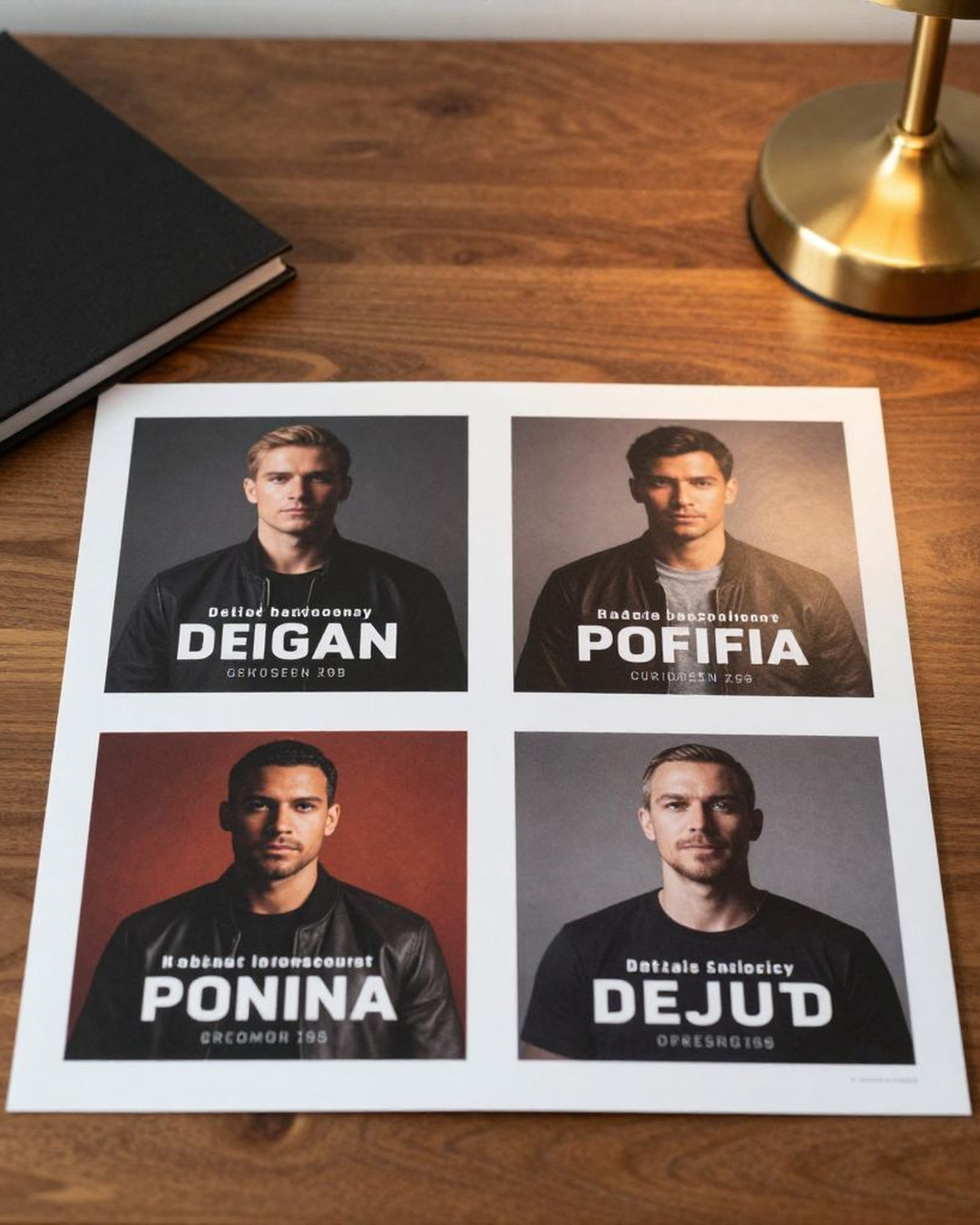
The pitch you lose is rarely the idea.
It's the range you couldn't show. Three concepts is a shortlist; eight is a defensible sweep. AD day rates run $800–$1,500, and the math on six concepts × three rounds is exactly the work that doesn't ship by Tuesday morning.
It's the rationale you couldn't write fast enough. The creative director who can defend a direction with a two-sentence audience read wins the room from the planner who can't. Pitch Packs ship that read with every concept.
And it's the feasibility argument the room didn't have. Tier-A stock-photo achievable vs Tier-C hero-shoot is a procurement conversation; making that call before the pitch is the difference between winning the work and winning unproducible work.
What a Pitch Pack actually looks like
Three directions from one brief, fully unpacked. Every direction in your pack ships with the same defense-ready treatment.

Brief: position the new electric SUV as the family-Friday-getaway vehicle. Audience: dual-income parents 32–48, urban-edge suburbs.
Strategic rationale
Dual-income parents 32-48 in urban-edge suburbs read editorial-minimal as sophisticated restraint — taste-level without the flex. The direction strategically positions the EV as a considered design choice rather than a tech trophy, letting clean composition signal premium without shouting.
Tagline trio
- rational Electric range for every weekend escape.
- emotional Friday begins the moment you leave.
- provocative Who says escape needs a charging cable?
Audience fit
74 / 100
Production feasibility
Tier A — stock-photo achievable
Risk flags
- Editorial restraint may undersell the weekend-escape energy the brief demands
- Minimal aesthetic risks feeling cold for family-warmth messaging
Medium adaptations
16:9 OOH · 9:16 story · 1:1 feed · 4:5 print — composed automatically.
The four medium adaptations this direction ships with:


Same brief, different art direction.
Strategic rationale
Dual-income parents 32-48 gravitate toward bold-graphic clarity — it signals confidence and modern taste without the opacity of tech-bro minimalism. The punchy visual language lets the SUV own the frame decisively, turning weekend escape into a graphic statement rather than a whisper.
Tagline trio
- rational Range that reaches your weekend.
- emotional Friday calls. You answer.
- provocative Suburbia deserves better than boring.
Audience fit
74 / 100
Production feasibility
Tier B — mid-shoot ($50k–$150k)
Risk flags
- Bold-graphic may feel too designed/stylized for family authenticity
- Risk of visual shouting where audience prefers understated confidence
Medium adaptations
16:9 OOH · 9:16 story · 1:1 feed · 4:5 print — composed automatically.
The four medium adaptations this direction ships with:


Same brief, different art direction.
Strategic rationale
Dual-income parents 32-48 see cinematic storytelling as a mirror of their own weekend escape fantasies — premium but lived-in, not loftier than their lives. The wide-frame narrative direction lets the SUV earn emotional protagonism by embedding it in a relatable Friday exodus scene rather than flexing spec sheets.
Tagline trio
- rational Range that reaches your weekend.
- emotional The getaway starts in the driveway.
- provocative Escape doesn't need a charging plan.
Audience fit
76 / 100
Production feasibility
Tier B — mid-shoot ($50k–$150k)
Risk flags
- Cinematic gloss may feel aspirational-over-achievable for suburban pragmatists
- Narrative framing risks burying the EV differentiator if story dominates product
Medium adaptations
16:9 OOH · 9:16 story · 1:1 feed · 4:5 print — composed automatically.
The four medium adaptations this direction ships with:


What you provide
Campaign brief (50-500 chars)
Required
Target audience
Required
Product / topic
Required
n variations
Required
Defensible range from day one
Eight distinct art directions on the same idea — the senior AD's afternoon, not their week.
Rationale on every direction
Each concept ships with the two-sentence audience read your CD wants on the slide. No planner-day required.
Audience-fit + feasibility ready
Every direction scored against the audience and tagged with a production-feasibility tier — Tier A stock-photo to Tier C hero shoot.
How much pitch prep is your team paying for in hours that don't ship?
Plug in your numbers — see the gap between what a traditional concepting cycle costs you and what the same range costs on Pixfino. Includes planner-rationale hours, which Pitch Packs absorb.
Traditional concept-prep cost / month
$0
Pixfino cost for the same volume
$0
Hours saved / month
0 hrs
AD day-rate range based on AAAA agency rate-card data, $800–$1,500/day for a senior AD (2024). See docs/campaign-concept-overhaul.md.
Who this is for
Creative agencies pitching new business
Walk in with the directions AND the defense for each
Friction removed: A pretty deck without rationale is a deck the planner has to defend live — and that's where pitches die.
In-house brand studios
Spin up internal-review concepts that survive the room
Friction removed: Internal reviews die when 'why this direction' isn't on the slide. Pitch Packs put it there.
Freelance ADs
Walk into pitches with the planner's argument already drafted
Friction removed: Solo ADs lose on rationale, not range. Pitch Packs close that gap.
Brand teams running pitches across regions
Localise the rationale, not just the image
Friction removed: Per-market reads are a planner-day each — when the room has eight markets to pitch, planner hours run out before audience reads do.
Production companies pre-vis
Show the feasibility tier alongside the concept
Friction removed: Tier-A vs Tier-C is the procurement conversation; getting it wrong before the pitch costs the relationship.
How it works
-
1
Drop the brief in
One paragraph: brand, audience, product. Add brand-kit context to anchor tone and palette across every direction.
Replaces: Three ADs taking the brief into Pinterest for two days.
-
2
Pick how many directions
Three to eight. Default is six — enough to show defensible range without spreading the room thin.
Replaces: An AD's manual range-stretch in Photoshop.
-
3
Generate
One run, all directions, around two minutes per concept including the rationale call and the four medium adaptations.
Replaces: A week of comps and a planner-night of defense docs.
-
4
Export the defense pack
Each concept gets a defense page — image, rationale, taglines, audience-fit score, risk flags, feasibility tier, medium adaptations — composed into a downloadable PDF.
Replaces: A senior planner's pre-pitch all-nighter.
Pixfino vs traditional production
| Traditional studio | Stock + retouch | Pixfino | |
|---|---|---|---|
| Lead time to pitch | 2–4 weeks | 1 week | Under 5 minutes |
| Per-pack cost | $8k–$25k | $500–$1,500 | 5 credits per concept |
| Concept range delivered | 1–3 | 3–4 | 3–8 |
| Strategic rationale included | Planner-drafted | No | Yes — per concept |
| Audience-fit score | No | No | Yes — 0–100 |
| Feasibility tier | Procurement decides later | No | Yes — A / B / C |
| Multi-format ready | No | No | Yes |
| Iteration cost | Re-shoot + re-write | Re-purchase | Free re-runs |
Questions and answers
Related templates



Eight directions, the rationale, the taglines, the score, the tier, the four formats — all in one PDF, all in under five minutes.
5 credits per concept. Free re-runs on every direction.